India's Roadmap to the 2027 World Cup and Tough SENA Tours
BCCI unveils its roadmap for the 2027 World Cup, focusing on fixing player injuries and improving preparation for tough SENA tours.
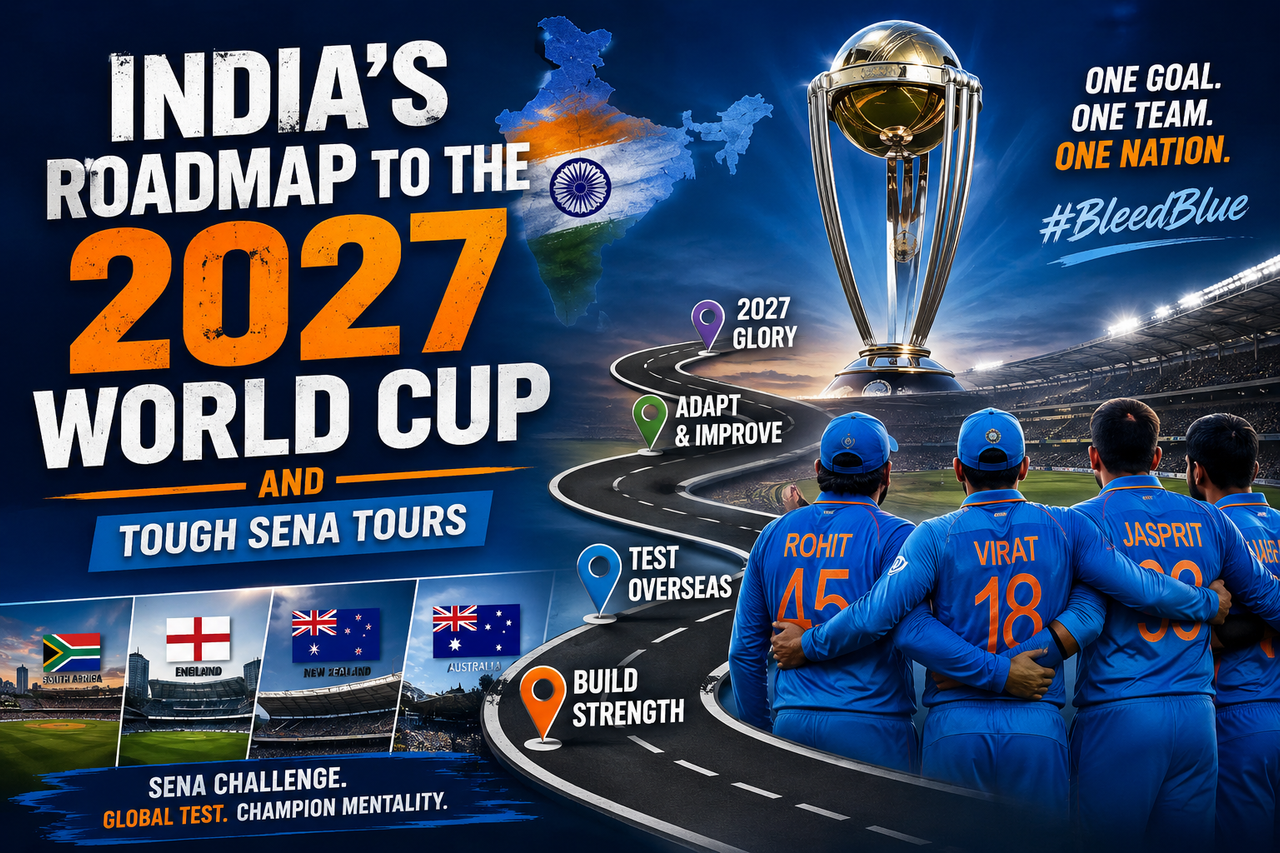
The road to a World Cup is never short and for India it is always a long haul. With the 2027 ICC Cricket World Cup set to be co-hosted by South Africa, Zimbabwe, and Namibia; Team India is already formulating its long term plan with an eye on the prize. But ahead of the trophy there is a more immediate test to take. India's greatest challenge to reach the promised land lies not in the tournament but in the SENA tours that come in between.
SENA (South Africa, England, New Zealand, and Australia) constitute the most competitive grounds for Asian teams historically because of the pace, bounce, and seam that is seldom seen on pitches back home. If India wants to march into the 2027 World Cup with a smile on its face it needs to perform well on these tours in the next couple of years.
Why Are SENA Tours Important For India's Preparation?
Any preparation plan for participating in a global event overseas revolves around adapting to the foreign conditions. Winning overseas is not as simple as lifting the trophy in home soil - and that is why the Indian team management has laid greater emphasis on the tours to South Africa, England, New Zealand, and Australia that lie ahead in the lead up to 2027.
Each nation brings their own challenges to the table with South African pitches offering bounce and seam movement, English conditions providing swing and seam movement, New Zealand offering unpredictable movement in wet conditions and Australian pitches offering pace, bounce and aggressive cricket. For India all these conditions have been a test; a test that they are yet to pass with consistency, although the victory in Australia can be termed as a landmark win.
How Are They Planning To Tackle The Upcoming Tours?
India's strategy to tackle the SENA tours takes shape in the form of discovering players with the ability to adapt, building a bowling attack that can trouble batters in varying conditions, and finding a batting line up that does not fold the moment the ball starts talking.
A few interesting takes on the strategy:
Rather than picking one settled XI and sticking with them blind-foldedly, the team management is looking to give opportunities to players in the bilateral series and shorter tours to understand their strengths and weaknesses better.
There will be an emphasis on building on fast bowling stocks. Over the last decade, India's rise has been powered by its seam attack. Having three to four fast bowlers who can trouble opposition openers in overseas conditions is crucial to a World Cup campaign.
The focus on batting technique to face the moving ball has been a much-debated topic. Experience suggests that while Indian batters may dominate spin and flat pitches at home, the same cannot be said of overseas conditions. Building an understanding of the art of batting against seam and pace has been a work in progress which has seen the domestic structure and A team tours play a major part.
Building Cricket Roadmap For 2027
A cricket roadmap that stretches beyond the next few months requires a long term vision, and that is where the planning from the last few cycles has shown improvement. Bilateral series against SENA nations ahead of the 2027 World Cup have been considered as more than just warm-up games in recent years. The information and patterns gathered from tours overseas directly impact the planning for the World Cup squad as much as IPL.
The IPL not only serves as a lucrative franchise tournament but also as a proving ground where players cut their teeth against the best batters and bowlers in the world. Players build match fitness and experience while under pressure that carries forward to international assignments.
Fitness and workload management will play an important role in this roadmap as the team management tries to balance bilateral series, ICC events and franchise cricket. More number of rotation policies - especially for fast bowlers - for the upcoming series is likely as the clock ticks towards 2027.
The Batting Challenge
If consistency in batting has been a concern for the national side it is mostly under conditions of seam and pace. Cricket has seen flashes of genius from Indian openers but the transition from dominating at home to scoring heavily overseas has not always been seamless.
The next couple of years will likely witness selectors sticking with certain batters through thick and thin simply because they possess the tools to succeed in overseas conditions if given the due opportunities. Players with the technique to battle seam movement and pace will get preferential treatment by the selectors even ahead of results, which is a fair assessment to make ahead of the 2027 World Cup.
Bowling Attack And Fielding Standards
While India's spin bowling arsenal is one of the best in the game, the SENA tours call for less dependence on spin and more on seam movement. Building a bowling attack that features two or three strike bowlers and all-rounders who can contribute with the bat adds depth to the attack. Similar emphasis is being laid on improving fielding standards which can tilt close games in India's favour. Higher standards in these departments will be of utmost importance, especially in tight games away from home.
Mental Toughness And Conditions
The conditions in SENA countries not only present physical but mental challenges for batters and bowlers alike. The cold weather, unfamiliarity with crowd behaviour, long travel hours, and variable pitch conditions are all contributors to what many would call a mental battlefield. Indian players who have spent considerable time playing county cricket in England or the domestic season in Australia tend to adapt faster; and that is why the team management has been giving more emphasis to exposure tours ahead of any major event.
Mental toughness is a trait that separates the good from the great, and it is best built on a young age rather than waiting for the World Cup to arrive.
What It Means For 2027
In simple terms, India's road to the 2027 World Cup passes through SENA territory and every series that India plays against these nations before the main event can be deemed as a rehearsal. If the upcoming tours witness a maturation in technique and mental toughness, a steeper rise in fast bowling stocks, and improved fields standards; India will enter the 2027 World Cup as one of the most well-rounded sides in the world.
The fine margins that have separated the champions from the contenders in recent World Cups have often been determined by the small details that come to light during tough tours overseas. The next couple of years will test and challenge Indian cricket but with a proper plan in place, success at the ICC Cricket World Cup 2027 will not come as a surprise.
FAQs
- What does SENA stand for in cricket? Why are SENA tours important for India's 2027 World Cup preparation?
SENA stands for South Africa, England, New Zealand, and Australia - four nations that offer the most competitive conditions for Asian teams, with rare bounce, seam, and swing movement. SENA tours allow Indian players to build techniques and confidence in these conditions while providing data for the team management to work with.
- What is India's biggest challenge on the road to the 2027 World Cup?
India's biggest challenge lies in finding consistency in scoring runs under different conditions and building a bowling attack that can trouble overseas oppositions on a regular basis.